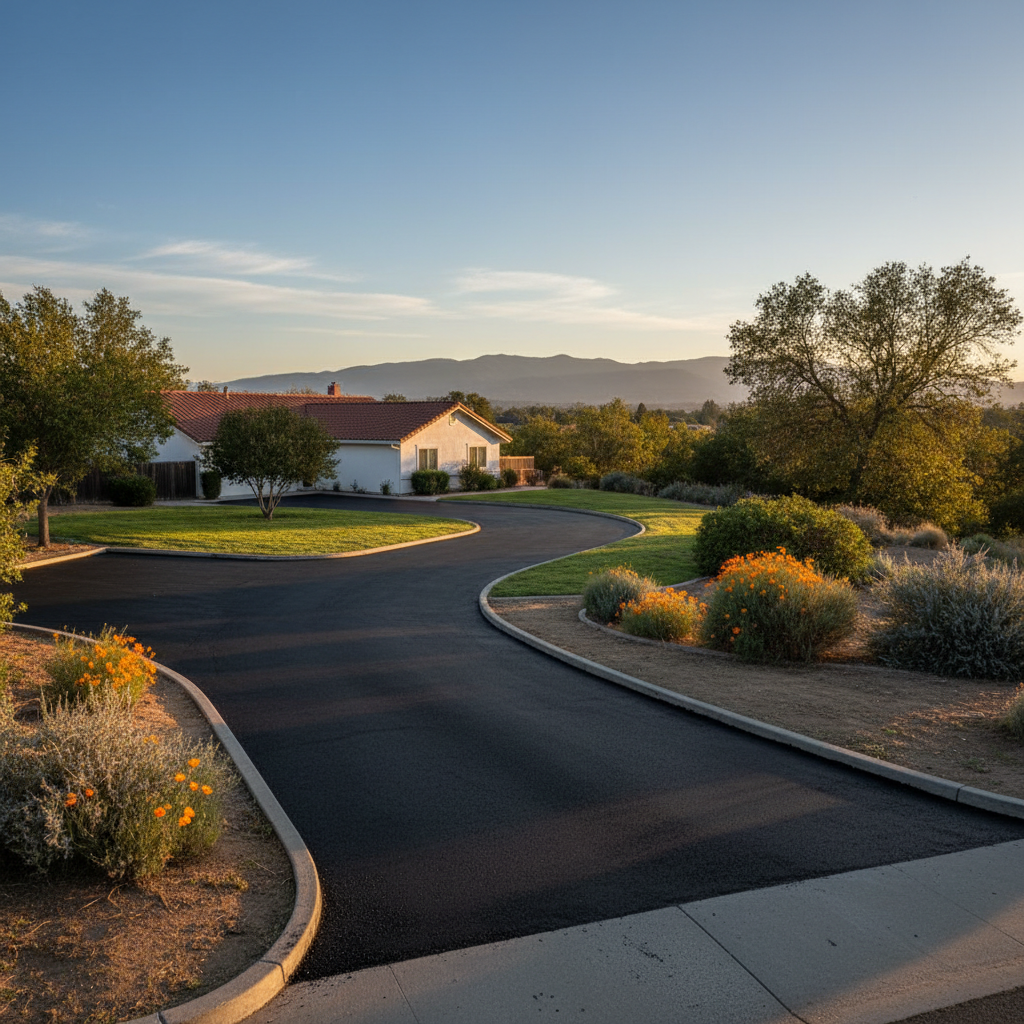
So, you're thinking about slurry coating your driveway or private road? Good call. It's a fantastic way to protect your asphalt, make it last longer, and give it that fresh, dark look — all without the hefty price tag of a full repave. But just like any home improvement project, you can't just dive in headfirst. There's some planning involved to ensure everything goes smoothly and you get the results you're hoping for.
How Long Will Your Slurry Coat Take? Let's Talk Timeline.
This isn't really a "weekend warrior" kind of job, where you decide on Friday and it's done by Sunday. Slurry coating needs good weather, which means you've got to plan ahead. Here in Chico, we usually have pretty ideal conditions for a good chunk of the year, but you still need to keep a few things in mind.
- First Contact to Your Quote: Once you get in touch with a contractor like us at Primetime Asphalt Paving, we'll typically swing by your place within a few days to a week. We'll check out the area and then give you a detailed quote.
- Getting on the Schedule: This is where you might need a little patience. The good contractors are busy, especially during our prime paving season (that's usually late spring through early fall, before the serious winter rains hit). You could be looking at a two to four-week lead time, sometimes even more, depending on how packed our schedule is and how big your project is. So, don't expect us to show up tomorrow, okay?
- The Actual Work Day: For most residential driveways, the application itself happens pretty fast. We're talking hours, not days, for the actual spreading.
- Curing Time: This is the big one, truly. Slurry needs time to cure correctly. You'll generally need to keep any traffic off it for at least 24-48 hours, maybe even longer if it's cooler or humid out. We'll give you exact instructions based on the product we're using and the weather conditions at the time. Don't rush this part; it's super important for how long it lasts.
What Happens When We're On-Site?
When the crew arrives, here's a general idea of how things will unfold:
- Preparation is Everything: We don't just slap the product down. We'll clean the surface thoroughly, getting rid of dirt, debris, and any loose bits of aggregate. Any significant cracks will need filling first. If you've got oil stains, we'll pretreat those too. This prep work often takes up most of the actual work day.
- Application: We apply the slurry evenly across the asphalt surface. It's a liquid, so it'll look wet and dark, naturally. We use specialized equipment to make sure the coat is consistent.
- Drying/Curing: Once it's on, then it's a waiting game. The surface will start to dry pretty quickly, but it needs to fully cure. This means absolutely no driving, no parking, no heavy foot traffic, and definitely no turning your wheels on it until it's ready. You'll see barricades or tape put up; please, please respect them.
- The Fresh Look: Once it's cured, you'll have a beautifully refreshed, dark black surface that protects the asphalt underneath. It's quite satisfying to see the transformation.
How You Can Get Ready for the Project
You've got a part to play too! Your cooperation really helps things run smoothly.
- Clear the Area: Move all vehicles, trailers, boats, basketball hoops, potted plants — anything and everything — off the driveway or private road. And I mean everything.
- Trim Landscaping: If you have bushes or trees hanging over the edge of your asphalt, trim them back. We need clear access and certainly don't want to get slurry on your prize-winning roses.
- Water Control: Make sure your sprinklers are turned off for at least 24 hours before and after the application. We really don't want water messing with the curing process.
- Plan Your Parking: Figure out where you're going to park your cars for a couple of days. Can you use a neighbor's driveway? Park on the street? This is super important, especially if you live in a neighborhood with limited street parking, like some of those older areas near Downtown Chico.
- Communicate: If you have any specific concerns or questions before we start, bring them up. Don't wait until we're halfway through the job, that's just asking for trouble.
Important Questions to Ask Your Contractor
Before you sign on the dotted line, just make sure you're clear on a few things. Any reputable contractor won't mind you asking these; in fact, they'll probably appreciate it.
- What specific type of slurry product are you using? There are different grades and types out there. Knowing what's being applied helps you understand what to expect in terms of how it performs and how long it lasts.
- What's your exact preparation process? How will they clean the surface? Will they fill cracks? Will they treat oil spots? Get all the details.
- What's the recommended curing time for my specific project? Get a clear timeframe for when you can drive on it.
- What's included in the price? Make sure the quote covers all the prep work, materials, application, and clean-up. No hidden fees, please.
- Do you offer a warranty or guarantee on your work? A good contractor stands behind what they do.
- Are you licensed and insured? Always, always ask this. You really don't want uninsured workers on your property.
- Can you provide references? Especially for bigger projects, it's always good to hear from other customers.
Getting a slurry coat done right really comes down to a little teamwork between you and your contractor. Do your part, ask the right questions, and you'll end up with a great-looking, well-protected asphalt surface that will last for years.