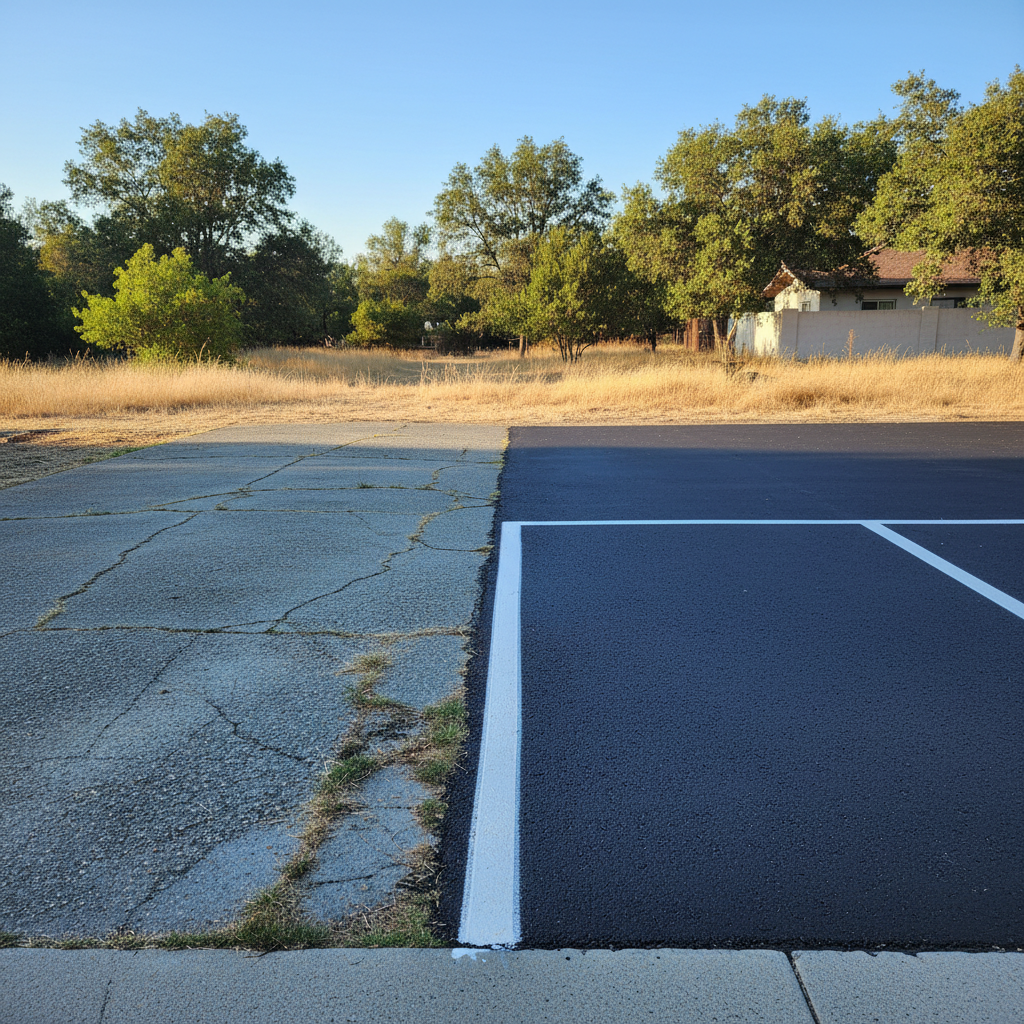
So, you've got an asphalt surface, right? Maybe it's a long private driveway, a shared access road, or even just a small parking spot for your home business here in Chico. You're probably thinking about striping it – for parking, for safety, or maybe just to make it look neater. Good idea! But then you hit a common question: what kind of striping material should you even use? Most folks immediately think of paint, and that makes sense; it's what we see most often. But there's another choice worth checking out, especially if you're after something really tough: thermoplastic.
Painted Asphalt Striping: The Basics
Let's kick things off with the familiar: paint. When I talk about asphalt paint, I'm generally referring to that special traffic paint. It's made to stick to asphalt and handle a fair bit of wear and tear. We apply it cold, right out of a machine, and it dries up pretty fast.
Cost: This is usually where paint wins the first round. It's almost always cheaper upfront. The materials cost less, and it doesn't need as much specialized gear or time to put down. If your budget's tight and you just need to mark out a space for a year or two, paint's a solid choice.
Durability: Here's the catch. Paint, even the good traffic stuff, just doesn't last forever. Our crazy Chico summers, with those 100+ degree days baking the asphalt, followed by our wet winters, really beat it up. You'll start seeing it fade, chip, and wear away, especially where cars drive over it a lot. You're probably looking at needing to re-stripe every 1-3 years, give or take, depending on how much traffic it gets and how much sun it bakes in.
Maintenance: Honestly, there's not much to do besides re-applying it when it wears out. You can clean it, sure, but harsh chemicals can actually shorten its life.
Appearance: It looks great when it's fresh. You can find it in different colors, though white and yellow are the usual suspects. Initially, it's crisp and clean.
Thermoplastic Striping: A Different Beast
Now, thermoplastic is a whole different ballgame. It's a plastic-based material that comes in a solid form – usually a powder or blocks. We heat it until it's molten, then apply it to the asphalt. As it cools, it forms an incredibly strong bond with the surface. This is the stuff you often spot on major roads and highways, not just because it's super tough, but because it's reflective, too.
Cost: This is where thermoplastic means a bigger initial investment. The material itself costs more, and putting it down requires specialized equipment and crews trained to handle the heat. So, yes, expect to pay more at the start.
Durability: This is where thermoplastic really shines. It's incredibly durable. It resists fading, chipping, and general wear much, much better than paint. It's built to stand up to heavy traffic, extreme weather, and UV rays. You're looking at 5-8 years, maybe even longer, before you'd even think about putting it down again. Just think about how long those markings last on Highway 99 — that's thermoplastic doing its job.
Maintenance: Very low maintenance. Once it's on, it's on. You won't be re-striping it nearly as often as you would with paint.
Appearance: It has a slightly raised profile, which can actually be a plus for visibility, especially at night or when it's wet, since it reflects light better. And it keeps its color vibrancy for a lot longer than paint does.
Which One Should You Choose?
For most homeowners in Chico, especially if you're talking about a private driveway or a small parking area that doesn't see a ton of cars every day, paint is often the go-to because it costs less upfront. It's perfectly fine for marking parking spots or a boundary line, and if you don't mind touching it up every couple of years, it's perfectly adequate.
However, if you've got a longer private road, a shared access lane, or a home business with regular vehicle traffic, and you really want something that's going to last, look good, and require minimal fuss for years, thermoplastic is absolutely worth the extra money. Think of it this way: you pay more now, but you save money and a whole lot of hassle down the road because you're not re-doing it every other year. For properties in places like Canyon Oaks or up in the foothills where those driveways can be long and winding, the durability and visibility of thermoplastic can be a huge advantage.
My advice? Don't just look at the sticker price. Think about how long you need it to last and how much you value not having to worry about it for a good long while. If you're looking for a professional opinion or want a quote for either option, give us a call at Primetime Asphalt Paving. We're happy to walk you through what makes the most sense for your specific situation.